
Astronauts who spend extended time in space may have problems with their eyesight, a new NASA-funded study found.
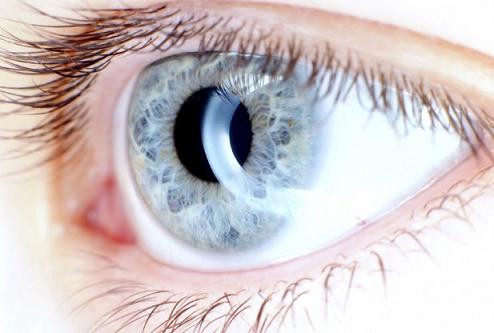
In the study, a team of researchers followed 17 eyes of seven astronauts and revised questionnaires after the flight of 300 more, half of them have served in missions that lasted at least six months.
Measured several factors, including refractive changes, pressure, orbital MRI, and visual acuity, and found that five of the seven astronauts experienced “hyperopic shift ? 0.50 diopters (D) between front / postmission spherical equivalent refraction in one or both eyes , “as well as a” flattening of the planet on MRI. ”
In addition, 29% of the 150 short-term missions and 60% of astronauts on long missions astronauts whose questionnaires should review the “experienced degradation in distant and near visual acuity. Some of these vision changes remain unresolved years after the flight.”
They concluded, according to the hypothesis that these changes occurred in the optic nerve and the eye of the astronauts could be the result of “cephalad fluid shifts caused by prolonged exposure to microgravity.” If so, it would mean that the eye will affect the weightlessness of space in much the same way, bones and muscles, Adam Marcus reports Reuters Health.
In an interview with Marcus, Alaska Native Medical Center (ANMC), eye doctor, Dr. Tom Made, lead author of the study, states that no astronaut still blind for five decades of space travel. However, he did say that the results are “something to worry about,” and may be due to increased pressure of fluid around the brain.
Mader also stressed that it is possible that the loss of gravity would cause a steep rise in pressure around the optic nerve, or a low gravity could cause vision problems, reducing the pressure in the eye. At this point, however, none of the possible causes are speculation, so Mader told Reuters: “It’s very hard for us at this moment to define exactly what is causing it all.”
According to Mark directly at least one of the astronauts observed the scientists still see the physical changes in the eye more than five years after returning to Earth. Further found that 6.6% of the short mission participants and 12% of long missions, the participants had problems with their distance vision, while in space, and 11% short of the mission participants and 34% of participants reported long mission “quarry”, changes in the correction lenses.
NASA is currently conducting follow-up studies, according to Reuters Health. The research is concerned with the U.S. space agency are carefully pre-and post-mission and vision exams eye anatomy, as well as analysis of the astronauts aboard the International Space Station (ISS).
Incoming Search Terms:
- long term effects space travel
- long distance space travel
- space eyes 3d
- space marine eyes
- eyes in outer space
- space between eyes
- my space eyes
- black eyes space