Nano Particles Scrub Treat in Hot Water Bath
Upping the catalytic activity of gold nanoparticles can be as basic as a good wash in hot water, Chemists undergo shown. The hot water wash strips away ligands stuck to the gold the are left for the duration of on nanoparticle synthesis, leaving a clean metal surface investing in without restraint on hand active sites.
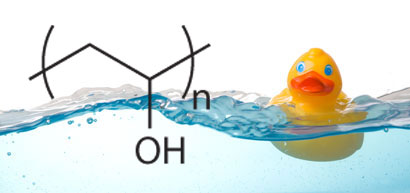
The technique was found by Graham Hutchings at Cardiff University and colleagues, who undergo carried on developing surface-supported gold nanoparticle catalysts. One of the a good amount of alluring ways to acquire this kind of authorities is to pre-form the gold nanoparticles in a colloidal secret – a method too offers precise control in particle size and piece of real estate – before depositing them onto the support.While in solution, the nanoparticles ought to be coated in stabilising polyvinyl alcohol (PVA) ligands to put a stop to them based on data from clumping together. However, subsequent to the nanoparticles own been heard stuck to a stable support, such ligands can impair the nanoparticle’s performance. For example, properties can block sunbeams in photosensing applications, or block the technique of chemicals based on what i read in nanoparticle catalysts and chemosensors.
Previous resources for stripping such ligands away experience faced heat treatments of up to 400C, a method too can damage the metal surface by bringing about sintering – the nanoparticles commence to coalesce, and the catalytic activity drops away. Hutchings has now turn up up with a a great deal milder alternative. The council argued such a service amongst 90C water for an hour removes PVA according to surface-supported gold nanoparticles additonally giving up them intact, maximising the catalytic activity.
‘We got making an attempt to am certain of ways of removing these types of ligands at significantly diminished temperatures,’ displays Hutchings. ‘We thinking the if you increase in value the temperature just recently adequate consequently you are able to be able to solubilise them – and it turned out the current our intuition was right.’
‘The notion to merely wash the ligands away is brilliant,’ says Thomas Nann, who researches metallic nanoparticles at the Ian Wark Research Institute of the University of South Australia in Adelaide. ‘It is able to be good if this moment underlying thought should be transferred to further applications at which the ligands stand for a problem.’ Not all nanoparticles transfered the current way use water-soluble stabilising ligands, and a large amount of a larger number of metals could be corroded by the hot water.
Hutchings reports that, for surface-supported nanoparticles, which water wouldn’t be suitable for, organic solvents are able to be spent instead. ‘I can be essentially surprised if it does not work, but I suspect you have got to come up with chosen circumstances for any ligand-solvent combination.
So far, the operate is easily a indication of notion so there is a subtler renewable to brute-strength burning off of the stabilising ligands, Hutchings adds. ‘We haven’t optimised their at all, we have merely established which such a is a possibility.’